Showing posts with label Vietnam. Show all posts

08 February, 2011

Of Vietnamese cats and chocolate bulls.

I've been thinking about writing.  Thinking about it while driving, while showering, while feeding the chickens, without ever actually opening my laptop, let alone putting my fingers to the keyboard.  It's been a bit busy around here. There's the making and the eating of savory and sweet crêpes, for which Jesus invented Candlemas.  Don't quote me, it's only my newest hypothesis.  Point is, all in the name of celebrating entrenched local tradition, we've eaten our way through an awful lot of pancakes...
And then the day after we went Vietnamese. As it was the Lunar New Year, or Tết, Babette, the cook at the village school canteen, made an all-Asian lunch featuring "nems," which is what the French call fried spring rolls.  Afterward, I spent the afternoon with five and six year olds, lighting incense, playing music, and showing some photos of Vietnam.  We talked about new year traditions, we hung lanterns and paper dragons, they colored an image I traced of the charming feline on the latest Vietnamese stamp (while in China it's the year of the rabbit, the Viet like to do it a whisker differently).  The kids were so engaged and we had a blast. As if that wasn't enough of a party, this year Tết landed on my birthday.  So there was that to celebrate...
And then to top it all, there was chocolate and an awful lot of other sweet things because the chocolate show came to town.  To Nimes, to be specific.
There were all the typical permutations of French chocolate, and some less obvious ones, too.

Beyond the making of chocolate macarons, and the covert sampling of chocolate fountains,  there was this sculptor, carving on a fine Nimois bull out of premium dark.
And there was chocolate wine.  Quite a trick. I actually quite liked the white version, a blend of Sauvignon and Semilion, in which chocolate has been steeped in such a way to impart a distinct cocoa scent and flavor while still looking as clear and light-filled as a standard glass of wine.
We all watched Francis Miot do his art. He has previously been crowned France's best confiturier, or jam-maker.  Awarded annually, that title means something here, because there's an awful lot of top shelf jam to be had in this country, and I'm not talking about Bonne Maman.   Here in my small corner of the country, an old-school, well brought-up mother or grandmother wouldn't appear on a neighbor's doorstep without bearing something homemade, usually jam...
There were piles of traditional French sweets, like preserved fruit, salted caramels, soft nougat (flavored with wild blueberries!).
There were darling jars of rum-soaked babas. At each stall, I managed to walk away after a sedate sampling of goods.  Until I tried the handmade guimauves, that is.
Forget anything you ever thought you knew about marshmallows.  Fresh, artisanal marshmallows can be incredible.  I never even realized I liked marshmallows until I tasted them in pastry shops.  At first, it's all airiness, and then the flavor seems to gently 'appear' in your mouth.  It's fairly close to magic.
There was rose, and litchee.  Violet, lavender, grapfruit, bergamot, and did I mention coconut with tiny dark chocolate bits?  Blackberry, green anise, pineapple, salted caramel, banana, wild strawberry, bergamot, oh I could go on...but I think I'll stop, because there's a sachet of them in the kitchen. 
Please don't ask me to share, it's my birthday...week.

22 January, 2011

My bit of Việt Nam. Part 3.

I know I don't have to travel.  I could have profound, life-rearranging experiences in my own backyard.  I think. 

It's just that, given enough time, I get this travel itch.  If I can't scratch it, which is usually often the case, it gradually recedes, only to return at some later point, more present than ever.  It's just one of those things, probably due at least in part to a gypsy lifestyle that began shortly after birth.  This persistent itch for change is unfortunately a bit hard to reconcile with my concern for the environment; I haven't satisfactorily worked that negative out yet.
A honey-sweet banana that fits, whole, in my hand.

But making the choice to travel (and I mean as immersive an experience as one can manage) is making the positive choice to break routine--even abandon it--to let in a little uncertainty.  And to begin to connect with the unknown.  It can even mean re-connecting with the things you thought knew, like your own family.  Or a banana
For me, traveling with young children means helping them to recognize and embrace, at a visceral level, ambiguity. It means directly teaching them that things can mean one thing in a given culture and something completely different in another, for example. It is about being able to show them that the world is actually this gorgeous crazy-quilt of diversity, despite the human race's best efforts to homogenize.   
The Mekong River is unlike any river my children or I have ever encountered.  From a high Tibetan plateau, it flows through China, Burma, Laos, Thailand, and finally Vietnam.  The tenth longest river in the world, it defines southern Vietnam culturally, economically--and physically--as the fertile Delta continues to expand through sediment deposit as much as eighty meters per year.  Many places are still best reached by canal or river. 

The Mekong Delta is the flat, coastal 'rice basket' of Vietnam, which is currently the world's number two exporter of rice.  In the northern mountains, rice is harvested just once a year, toward the central region twice yearly.  In the Mekong Delta, rice is harvested three times a year.  As lovely as rice paddies are, cultivating rice is back-breaking, time-consuming manual labor; it is difficult to look at a bowl of rice in quite the same way.
One could also argue the Delta's a bit of a fruit basket, as well.  As well as the familiar tropical staples, it's full of fruit I'd never tasted before, like custard apples, and some I'd never even heard of, like milk fruit. The Delta is densely cultivated and pretty densely populated.  Unfortunately, it is also regularly flooded, a reality which the locals try their best to work around, but houses can still spend a good while inundated every year.

Another (diminishing) feature of the Delta are the floating markets, where, directly from their houseboats, middlemen peddle produce to sellers who then go to markets on land to resell.
It's easy to see what each middleman has to offer: simply look at what's hanging from the long bamboo pole attached to the boat.  Despite how hard they work and how challenging their day-to-day lives are, southern Vietnamese are considered by their fellow Vietnamese to be generally the most easy-going.  I can't disagree. We were charmed by their broad, warm smiles.  
Speaking of toothy grins, I didn't get the impression that crocodiles are to be found in the rivers or canals anymore.  These days they're farmed, and the curious can partake of reptile meat in any number of ways, but their skin is where the money is, of course.   
 
Essentially, we wound our way in a large, uneven circle taking in the pattern of life in the Delta, and making time for visits to a temple or three.  This is where I found the most decorative incense.
Incense wafts through any place of any significance, really, and manages to seem utterly perfect and essential to the place and moment.  The kids were more tuned into the incense as they had already seen it being made by hand and by machine up north.
Distances doesn't look all that great on a map of Vietnam, but vehicles travel relatively slowly there, due to stringent speed limits and often flood-damaged, poorly maintained roads, so everything takes longer than you'd imagine.  Thing is, you really don't see people shaking fists or swearing no matter how backed-up the line is, even in the horrendously dense, motorcycle-clogged traffic of Saigon.  After what sometimes felt like a snail's pace, we found ourselves in the small town of Chau Doc, just some forty kilometers from the Cambodian border. 
Chau Doc is a fishing town, as evidenced by this prominent statue.

This is where some visitors take a several-day boat trip to Angkor, that extraordinary twelfth century temple complex in Cambodia. 
We stayed in Chau Doc to celebrate Christmas.  And it really was among the very best of Christmases. 

After that, we were off by ferry, to the island.

17 January, 2011

My bit of Việt Nam. Part 2.

You might as well have slapped me.  Right hard, too.  The shift in temperature and humidity was that shocking.  And this was Hue, Vietnam's old imperial capital, in the winter.  I'd clearly left the wild, mysterious, and cool North far behind.
Hue is where you come to see the ancient Citadel, and the Forbidden Purple City, formerly reserved for the exclusive use of the royal family.  Or rather, you come to see what is left of the City after heavy bombing and heavy hand-to-hand combat between the Viet Cong and American armies. 

Try explaining eunuchs, over a hundred concubines, oh, and a horrendous war to tots ten and under; it wasn't simple.  
Fortunately, the whole area is now a UNESCO site, and restoration works have been underway for some time now, as the government has come to realize the significance (both economic and historical) of the heart of old feudal Vietnam.
 
If you ever go to Hue, you must take in some of the imperial tombs, like that of the flamboyant, lavish Khai Dinh and the serene, poetry-loving Ming Mang; a view of the latter is pictured below.
But between tomb visits, a visit to the charming temple dedicated to the eunuchs and general wandering, a person's got to eat.  Preferably well.  Let that be written on my tombstone.  My discovery (laugh at me if you were already in the know) was deep-fried banh bao. SO good.  I already knew (and adored, in a guilty, fast food kind of way) banh bao, light, palm-sized doughy buns, stuffed with any number of different kinds of meat or vegetables, then steamed.   They're pictured below--in this instance filled with a well-sauced chicken and costing 50 cents each (20,000 D being currently equivalent to 1 USD). 
Fried ones (pictured in bottom half of the photo) aren't oily at all.  They're nicely browned, but don't gleam, not even slightly, with fat.  Now why didn't I finagle my way into the kitchen to find out how they got that crispy outer surface and eye-rollingly delicious interior?  I may have been distracted by the delicious vats of pho...
For the brief time we spent in Hue, we were regulars at that corner shop.  All the girls were waving goodbye on our last visit as we pulled away.  I also took a more formal cooking class while in Hue, learning to make Central style dishes, which are clearly different from the rest of Vietnamese cuisine.  But more about that another time...

We made our way from Hue to the Danang area (passing by the beach of China Beach fame), and dropping our bags (for a few days) with a sigh of relief in little Hoi An.
There, the boats are painted, as dictated by tradition, with eyes to ward off the crocodiles that once filled the waters. 

A former port town with its own deep wealth of international history (everyone docked there, from the Persians to the Japanese to the Dutch), Hoi An is extremely picturesque, with a beauty preserved so carefully it can verge on the artificial.  Not to dissuade you, but imagine a Vietnamese, cultural Disney.  Because it is a UNESCO world heritage site, there are very strict limitations on what the locals can do.  The character must be maintained...And yes, all this justifiable attention means a lot of tourists.
Nevertheless, it is very walkable, very family-friendly, and wonderful for thoroughly checking out the market and various street foods on offer.  Not to be missed: the local specialty, cao lau, a thick wheat-noodle dish heaped with pork and herbs, sauced with an addictive, rich broth, and topped with sinfully crunchy, fried crouton-like square bits.  Some people go there for the scads of tailors offering made to measure, inexpensive clothes.  For me--just as with the local canines--it's (nearly) all about the food.  
(As with my cooking class, more on the market(s) later. Promise!)
Before the cloth--especially the silk--gets to the aforementioned tailor shops and stalls, it has to be made. 

The poppy seed-like bits seen below are silkworm eggs, deposited by an adult silk moth.  After fourteen days, these hatch into silkworm larvae.
The silkworms are exclusively fed mulberry leaves.  In our house, here in France, silkworms used to be raised in the attic, as the Cevennes region was a major supplier of silk to the Lyon textile industry, way back before it was dealt a mortal blow by the development of cheap artificial fibers, like nylon.  They say that in a roomful of voracious silkworms, the sound of their chewing is clearly audible.  I think of that when I'm putting away the previous season's clothes...
Silkworms do nothing but eat for twenty or thirty days; predictably, they grow very quickly.  They molt several times.
Then they make a cocoon using their spit glands.  The cocoon is made of one single thread.
 
The cocoons here are from different types of silkworm.
According to Wikipedia: "A cocoon is made of a thread of raw silk from 300 to about 900 meters (1,000 to 3,000 feet) long. The fibers are very fine and lustrous, about 10 micrometers (1/2,500th of an inch) in diameter. About 2,000 to 3,000 cocoons are required to make one pound of silk. "  To get that silk, the cocoons are boiled, and several strands of silk are combined to make a single thread.
The threads are cleaned, dyed and then woven into gorgeous, light-weight fabric.
Here, you can see the green thread being pulled through the red threads to make a shimmery length of silk cloth.
The weaving machine is infernally loud and clackety. 
Loud enough to cover the grumbling of my stomach, as I consider how reasonably soon I can get back to the market--and what will be on offer. 

11 January, 2011

My bit of Việt Nam. Part 1.

I'm still a little startled to be home again.  I'm not complaining, I've made a soft landing: it's the season for galettes des rois, those flaky puff-pastry discs stuffed with frangipane that satisfy your body as completely as any dessert possibly can.  Nostalgia and butter in one mouthful, with that delicate but pervasive almond scent to knock it out of the park.  I self-soothe with galette des rois.  I get galettes des rois pretending they're for the children, who do indeed covet the charming fève hidden inside each one.  But who am I fooling?

(Small pause to thoughtfully finish swallowing).

An airplane can carry your body halfway around the world in half a day, but your spirit gets lost somewhere in the slipstream.  We human beings generally benefit from a little more adjustment time.
Where to start with what we did in Vietnam? We navigated the long, skinny country by plane, train, automobile, boat, kayak, motorcycle and bike.  We went from the proper cold of the north to the southern Mekong warmth, with a intermezzo in the central region.  It is a country of contrasts; I suppose I should just plain begin at the beginning.

We landed in Hanoi. The grand, 1000 year old city of the north is a bit ramshackle but definitely human-scale, the old bits are just ideal for wandering, as long as you're willing to do a little weaving through the flow of foot and motorcycle traffic.  Having explored the city for a couple of days, we then took the northbound, overnight train to Lao Cai, a small city on the Chinese border, down the road from the celebrated, rice-terraced trekker's heaven around Sapa (Sapa itself suffers some of the aches and pains of overdevelopment, but the plush hotels can make for a nice respite).

Waking up in Vietnam means having a good shot at scoring the best, biggest bowl of pho (bo), which is a heady, aromatic beef broth dosed with rice noodles, fresh herbs, lime, and some thin slices of beef, which finish cooking in the bowl of broth. This is the true breakfast of champions, truly the national dish, and while it may seem counterintuitive to eat beef in the morning, you really have to give this an a.m. try once in your life. You'll be ready for pretty much anything the day throws at you.
From Sapa, we headed even further north to the remote, unspoiled reaches of Ha Giang Province and onward, through Meo Vac all the way to Dong Van.  Some parts seemed visually closer in spirit to the remoter parts of Central Asia than Southeast Asia: extraordinary, sweeping landscapes, with mountains that a child would draw: vertiginous, vertical. 

Much of the time, the road was virtually one lane, with a generous amount of hairpin turns. I got some serious vertigo a couple of times. At some points the fjords of Norway came to mind, at others parts of the American West, in some places all jutting granitic rock. We saw at least one river that came roaring out of and down a mountain, having been in that mountain chain for kilometers, racing through a network of caves.

We found ourselves at an open, formal-ish outdoor Communist Party musical celebration for Dong Van Geopark, which has been freshly, officially endorsed by UNESCO as a world geopark (one of just 77 worldwide). Some local Party prominent were onstage, but most of the townspeople chose to pay an entrance fee to the bustling local fair instead, which is a thinly disguised opportunity for more commerce in the form of clothing, foods, etc. On-stage at the fair, there was a guy juggling fire to the tune of the Blues Brothers. At both places we were the only non-Vietnamese, and proved to be a fairly compelling sideshow. The children drew attention and smiles everywhere. Couldn't tell you how many times they were photographed and petted, whole-heartedly embraced by men and women alike, no matter the age. 

We visited the gently decayed, pine-ringed palace of the Hmong King, who was installed and propped up by the French, and who functioned as the opium middle man (with his own kingdom of four northern districts) between France and China. Amazing story, though the kingdom lasted only two generations...ending with a ceremonial handshake with Ho Chi Minh. Some of the family who remained got cushy high level government positions, others, disappointed and angry, left for the diaspora.

We stumbled upon the two-day long initiation rites into manhood for a rather awed thirteen-year old of a tribal minority. By stumble I mean we drove by on a remote, precariously steep mountain pass, saw something colorful happening, got out, and then suddenly the masked shaman made me blush very, very deeply when he teasingly went after me, suggestively waving the gourd vegetable tied to his waist. All the watching women of the tribe, standing nearby, enjoyed this mightily. We all formally passed on best wishes to one another before continuing on our way. The little boy at the center of all this just looked solemn.

Still above 1400 m in elevation, we got out of the van to watch some guys hard at work hand-cranking a metal centrifuge to extract honey. They smiled broadly at our frank interest, and we were given honeycomb to chew on (a first for the kids, who shamelessly begged for more) and a teacupful of honey to dip our fingers into. It was very liquid. Hard work anywhere, this particular beekeeper had a tarp tent as he lives 250 kms away. This, perched upon a windswept rock, among the mountain wildflowers and beehives, was his home during the harvest.

I can now say I've held a whole cardamom pod for the first time (at home, I have what are labeled as "whole" cardamom, but are really just "pellets" from inside the ovalish pod).  The laughing girl who was selling them--a mere 10 dollars per kilo--gave one to me so it now ornaments my kitchen butcher block. We also have been chewing on peppery bits of cinnamon (good thing given all the garlic we were ingesting), torn from rolled cinnamon bark longer than my forearm.  Brought some of that back home too.

On our circuitous way back from the northernmost reaches, we remained lucky with the weather, which was dry and usually clear. The homestays were a highlight. The large thatched wooden home--at least the sort we stayed in--functions as more of a unheated windbreak than a house in any Western sense of the notion, I discovered. This first home was spartan but kept clean by our smiling hosts, with newsprint as wall decor (though I noticed a Britney Spears decal among the cute Japanese girl-stickers below the TV). We ate well (the delicious cooked pumpkin leaves were new to me), and slept upstairs, on the floor, under extremely heavy, dense bedding. Seriously, so heavy; I've no idea what was inside the bright (think Frida Kahlo Mexico kind of colors) velour duvet covers. We slept like rocks in the open upstairs room, but we certainly didn't sleep in: with the rising sun came a cacophony of animal sound, and with those thin walls and floors, we might as well have been in the middle of a zoo. A domestic zoo. I half-believed the chickens, pig, cat, horse and whatever else were just readying themselves to climb into my mosquito-screened bedding. Especially those cackling chickens.

After a tea which they kindly laid out for us in the morning sun, we walked a kilometer to Bac Ha, for the largest weekly market in the entire province, breakfast pho, more cacophony...and a livestock sale to boot. It was probably the most colorful market I have ever seen, packed with vibrantly clothed Flower Hmong, one of the fifty-some ethnic minorities in Vietnam (each of whom have their own distinctive culture, language and traditional dress). 

We learned how to make cellophane noodles.  We watched hemp being turned into thread, thread being made into cloth, cloth being dyed indigo...We tasted local goat, some amazing peppermint honey, some corn moonshine, and other potent brews.  I'll show you some pictures of these, another time.

Then there was the astonishing Phat Diem cathedral, so resolutely Far Eastern and Catholic (courtesy of the French) at the same time; Tam Coc, known by some as "Halong on the rice paddies", where the women row their boats with their feet past surreal limestone mountains; and, not to be missed, Halong Bay itself, the kind of place that makes you breathe deeply and rub your eyes to be sure it's all real, all that exquisitely beautiful.  That was where the kids went night squid fishing.

I don't think I should actually admit how many photos I took, but here are a few:
(A technical P.S.: Do you happen to know better quality--and free--video-making/uploading programs?  This Blogger/Picasa version takes several eternities, and in the process the images lose all their sharpness...plus, perhaps unrelated, I can't use any of the music on my iTunes.)

07 May, 2010

Dreaming of Phở.

I miss a lot of things about Paris, the revolving art shows, the endless window-shopping of every kind from arcane bookshops to perfumeries to galleries (what the French call lèche-vitrine, or window licking). I miss Ladurée's rococo tea room and I miss the grand boulevards (Haussmann was right, in the end). But lately, I find myself very much missing a restaurant that, from the street, is utterly forgettable but for the queue of people waiting to get in, from 9 am to 11 pm.

Just off the Place d'Italie, you quickly stumble into the Parisian rendition of Chinatown, and here, near a busy thoroughfare, you find Pho Banh Cuon 14. Many believe it serves Paris' best Vietnamese beef noodle soup. The very French actress (Indochine, etc.) Catherine Deneuve proclaimed it a favorite, with good reason. The beef broth is transcendent, as any good pho broth is--complex with star anise, cloves, and ginger, translucid and skimmed of all oil. In the broth, a swarm of white rice noodles and very thin slices of rare beef (or beef meatballs, or tripe...pretty nearly any combination of things you'd want from a cow is possible). Beside the bowl, a plate dangerously heaped with basil and other herbs, mung bean sprouts, lime quarters, a dollop of hoisin sauce. All this and some chili sauce (Sriracha style) go into the piping hot bowl.

Really though, before you dash out the door, book the flight, or hail the cab, you may need to adjust your expectations: zero atmosphere here, the waiters are fast, business-like and smiley friendliness is just not done (Asian no-nonsense in full gear). This might even be considered a bit of a dive in the City of Light. People come for the soup (and the banh cuon, which in France are referred to as raviolis vietnamiens). Yes, there are one or two other things on the menu, but people come to slurp Pho, maybe they even gobble some raviolis, and suck down some Vietnamese iced coffee. They pay, they leave. There's a line of people waiting with hungry eyes, and after sitting cheek to jowl, sometimes even on stools, eh, lingering, what's that?

Phở is for all intents and purposes the national dish of Vietnam. It is ubiquitous from Hanoi in the north, where it originated, to Saigon in the southern delta, where it was refined. The Vietnamese diaspora, with its largest population clustered in the United States, has introduced it there and in Canada with great success. There are far fewer Vietnamese in France, but they number at least 250,000--and many of these immigrants seem to own excellent restaurants in Paris, Lyon, Marseille...there's just nothing authentic remotely close to my home.

Logically enough, I could make this dish at home. I'd have to travel an hour to get the ingredients, but I could do it. If I were to make it, I'd follow the excellent recipe at Wandering Chopsticks. As you can see by her photos and description, this is a dish that takes serious time and patience. These days I'm short on both of those, so I'm left writing about this magnificently filling soup that is as nourishing to the soul as it is to the body.
Go to Pho Banh Cuon 14 if you find yourself in Paris. Do it in my name, then tell me about it. I'll live vicariously through your food adventure. Deal?
Restaurant Pho Banh Cuon 14
129 avenue de Choisy, 13th arrondissement
(Metro: Tolbiac)

Some good online resources for Pho and things Vietnamese and edible:
- Loving Pho is a truly encyclopedic site for all things pho-related.
- A new monthly food blogging event, called Delicious Vietnam, started by Melbourne-based A Food Lover's Journey and Arizona/Southern California's Ravenous Couple.
- Acclaimed author Andrea Nguyen's blog Viet World Kitchen is a trustworthy and comprehensive guide for those who are ready to get their hands dirty at the chopping board.

07 April, 2010

In between things.

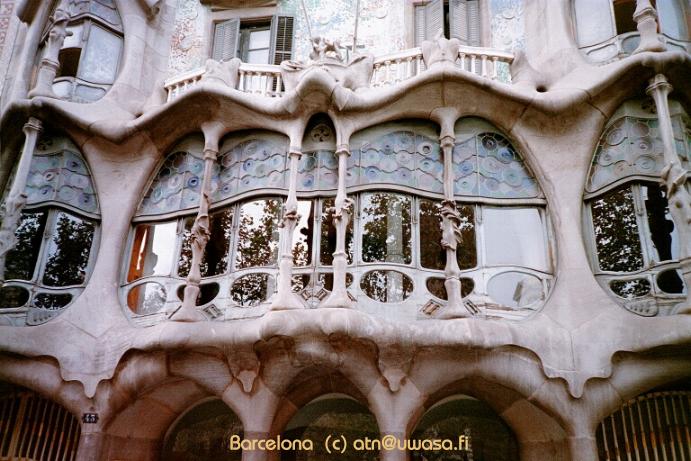
Engaged in some après-winter preemptive weeding and pruning of the strawberry plants, raspberry canes, currant and blackberry bushes, so I'm already anticipating the summer harvests. With a little help, I candied the violets gathered from the now vividly green meadow, so I'm anticipating the cake or two that'll be decorated with these sparkly little flowers.I've an ear infection, I'm sore and I absolutely have to see my doctor tomorrow, but none of that matters, because I'm off to Barcelona, and I'm gleefully anticipating all that means. You know, evening promenades, citrus sangria made with cava, tapas galore--god forbid before ten p.m.; gothic little streets in Gaudí's city, with buildings emerging whole from some wild utopian dream of what a structure might be; and the catalan language, so full of x's that flummox those of us silly enough to imagine it remotely resembles Spanish. Yes, that Barcelona. As I'll have no internet access, let me leave you something that will serve very well one of these cool-ish spring evenings.

(While I may well return bearing advice for crema catalana,) I offer you today a crème caramel. The workhorse of the French bistro, the ubiquitous dessert (actually usually called a crème renversée au caramel in France) gets a Vietnamese lift in this deeply rich, oh-so-smooth version made with coconut milk. I found this easy little gem in Corinne Trang's delightfully comprehensive, pan-Asian Essentials of Asian Cuisine. My only modification was to reduce maple syrup rather than making a caramel sauce. It's a snap to make and so rewarding, please do try it, and let me know what you think.

I'll be back in a week, at which point I'll also post a photo. It's just the kind of dessert that is always set upon and devoured before it occurs to me that I should perhaps track down my camera.

Crème caramel au noix de coco (Coconut Crème Caramel)

Serves four.

1/2 cup maple syrup
1/4 cup sugar
3 large eggs
1 cup unsweetened coconut milk
1/2 cup milk

Reduce the maple syrup by about half in a saucepan over medium heat. The syrup should actively bubble and the reduction take 5-8 minutes, with no stirring necessary. Remove from the heat and divide the thickened syrup among four custard dishes or other oven-proof 1/2 cup recipients. Tilt the dishes to evenly coat the bottom and partly up the sides.

Preheat oven to 140C/275F. Meanwhile, whisk 1/4 cup sugar and the eggs until well-combined. Add the coconut milk and cow's milk, and continue to whisk until smooth and the sugar is completely dissolved. Divide the mixture among the custard dishes. Make a bain-marie (water bath) by filling a larger baking dish halfway with water. Place the four dishes in it and bake until the custards have set, about 45 minutes. Remove from the oven and allow to come to room temperature still in the water-filled baking dish.

Once cooled, cover with plastic wrap and refrigerate at least 12 hours, preferably 24 or more, as it sets less firmly than a standard custard. To serve, loosen the edges gently with a knife and turn out onto plates, so that the maple caramel is on top. Serve well-chilled.

02 March, 2010

Southern California with a Vietnamese twist.


This is my great-grandfather on my mother's side, in 1941. He was the owner of a large ceramics factory in Vietnam.
Between then and now, a whole, messy chain of events slid into place. The Communists took over Vietnam, appropriating all private industry, including of course, the prosperous family business. Then came the grim and precarious years in concentration camps for various uncles, the forced labor for many aunts and the eventual flight to America, with not much more than the clothes on their backs. The immigrant tale redux.

Multiply my family's story exponentially, give or take a few details, add the bare-knuckle efforts of the first generation and the open arms of the second, and you get Little Saigon, in Westminster, California. Of the approximately 160,000 overseas Vietnamese living in Orange County, some 60,000 are clustered in the Westminster/Garden Grove area, a cultural epicenter for the Vietnamese diaspora, according to census records, although Vietnamese Americans put the number far higher. If you're interested in how and why Little Saigon came to be, you can find an excellent historical explanation at Wandering Chopsticks.

A culture is often accessed--and assessed--by the kitchen door. If you find yourself in Los Angeles or Orange County, there are very many such "kitchen doors" to try; the Vietnamese cuisine available today in Little Saigon often rivals the best to be found in Vietnam.

Here are a few places where you won't go wrong, where the food is mouth-wateringly authentic, the bill is easy on the wallet (helpful in these recessionary times) and the atmosphere is pleasant.
For a steaming bowl of star anise-scented Phở, go to Pho Thang Long Restaurant, located within a strip mall at 9550 Bolsa Ave., in Westminster (tel: 714 839-4955). If you aren't familiar with what is practically the dish of Vietnam--and which as Andrea Nguyen puts it, rhymes with "duh"--then check out her comprehensive description of this (inexpensive) body-and-soul food.
As you can see, the restaurant has a more upscale atmosphere than the typical "ethnic" restaurant (even though a huge bowl still goes for $5-8), and I kind of fell in love with the orange walls. Please don't blame me if you find yourself with long-term cravings for this soup. It happens to nearly everyone, which explains its immense popularity among Vietnamese and non-Vietnamese alike.
If you're looking for a more crunchy addiction, opt for the nem nướng cuốn at the rather hidden but always bustling, well-loved Brodards on Westminster Avenue in Garden Grove. It's the main reason diners come to the large restaurant, judging by their tables.

This is what it looks like:

This is what it tastes like: fresh (with its translucent rice paper casing and green herbs), crunchy (thanks to the rolled and fried green onion within) and oh so savory (that due to an ultra-delish pork pattie utterly unlike Western style sausage and the secret sauce that you dip it in).
Brodards also serves a eye-wideningly good bánh hỏi chạo tôm (Angel vermicelli "cake", served under shrimp patties grilled on sugar cane sticks then sliced and served with peanuts, browned shallots and fresh scallions). Tuck it into the accompanying lettuce, add cilantro , basil and other herbs...and you've your own bit of heaven. Crunch, sweetness, saltiness, an explosion of fresh herbs--as savory and delightful as the pork pattie rolls, but then on a seafood riff.
There are other restaurants I'd also recommend, such as the well-established Van restaurant (Nha Hang Van, 14122 Brookhurst St, Garden Grove, tel: 714 530-6858). Aficionados come not for the atmosphere (there isn't really any, per se) but rather for its top-notch bánh xèo (a crispy stuffed crepe) and bánh khọt (melt in your mouth fried "open-face" cakes with shrimp in the middle). It is a favorite of my aunts and uncles who live in Little Saigon, but you can also read a review and see nicer photos than I took (I guess I was too busy scarfing down food that time!) by the always-engaging Hong and Kim at Ravenous Couple.

In case you're wondering, I did do more than eat my way through Southern California. Honest. I'll write about it soon, but I have to stop for lunch; writing this has made me hungry.
Related Posts with Thumbnails